Retrograde
Hello everyone and welcome back for another installment of theoretical dance in action. This week we will be focusing on the term retrograde and discuss what it means, why it is relevant to dance and explore some different ways it could be used in the classroom.
What Does "Retrograde" Even Mean?
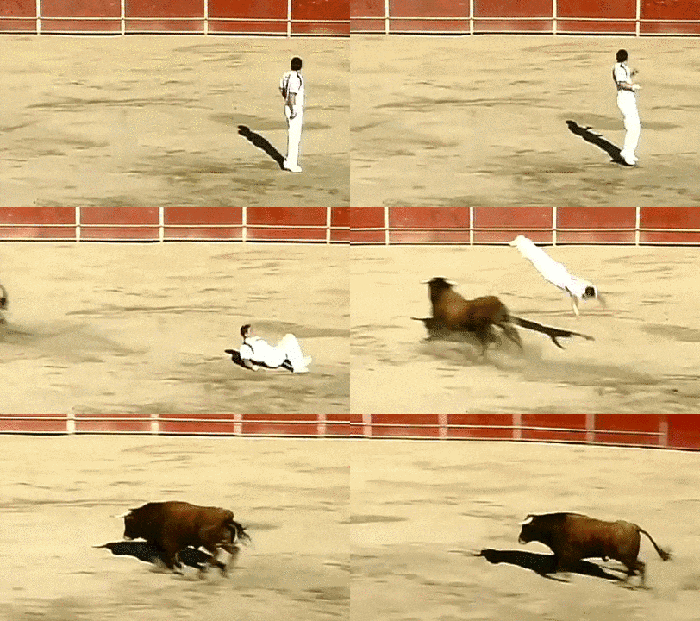
Try this riddle: What does the term retrograde have in common with this gif?
How Retrograde Could Look in a Classroom
I couldn't help but think back to a previous post where I showed a video about the evolution of dance (click here if you haven't seen the video). The video is quite enjoyable as it depicts the evolution of dance by going back in history and working its way towards present-day dance styles. Hence, an idea I have is using the concept of retrograde as a follow-up lesson or activity in relation to taking another look at Dance Styles. I think it would be interesting for students to an activity that incorporates the reverse evolution of dance. Students would be excited to choose their favourite dance currently and it would ideally motivate them to engage with the activity.
Resources to Support Retrograding
I once again have to defer to the resource CODE for a multitude of resources and ideas related to retrograding. Specifically, I would like to take a look at the cross-curricular connections that are related to retrograding.

I particularly like the science example that has students move backward through the different states of matter or even the water cycle. Given the right class maturity and culture, I think it would be extremely interesting to use retrograde to have students reenact certain historical events using dance and retrograde. For example, illustrating a particularly controversial event by starting at the end and working backward would produce some extremely interesting artistic results.
Accommodations and Modifications
CODE recommends that younger students can begin to explore retrograde by isolating certain body parts before trying to incorporate the entire body.
That being said it would also be interesting for more advanced dance students to use different body parts to show different aspects of retrograde. For example, a student could have each arm represent a different object or focus of retrograde.


Comments
Post a Comment